January News Roundup
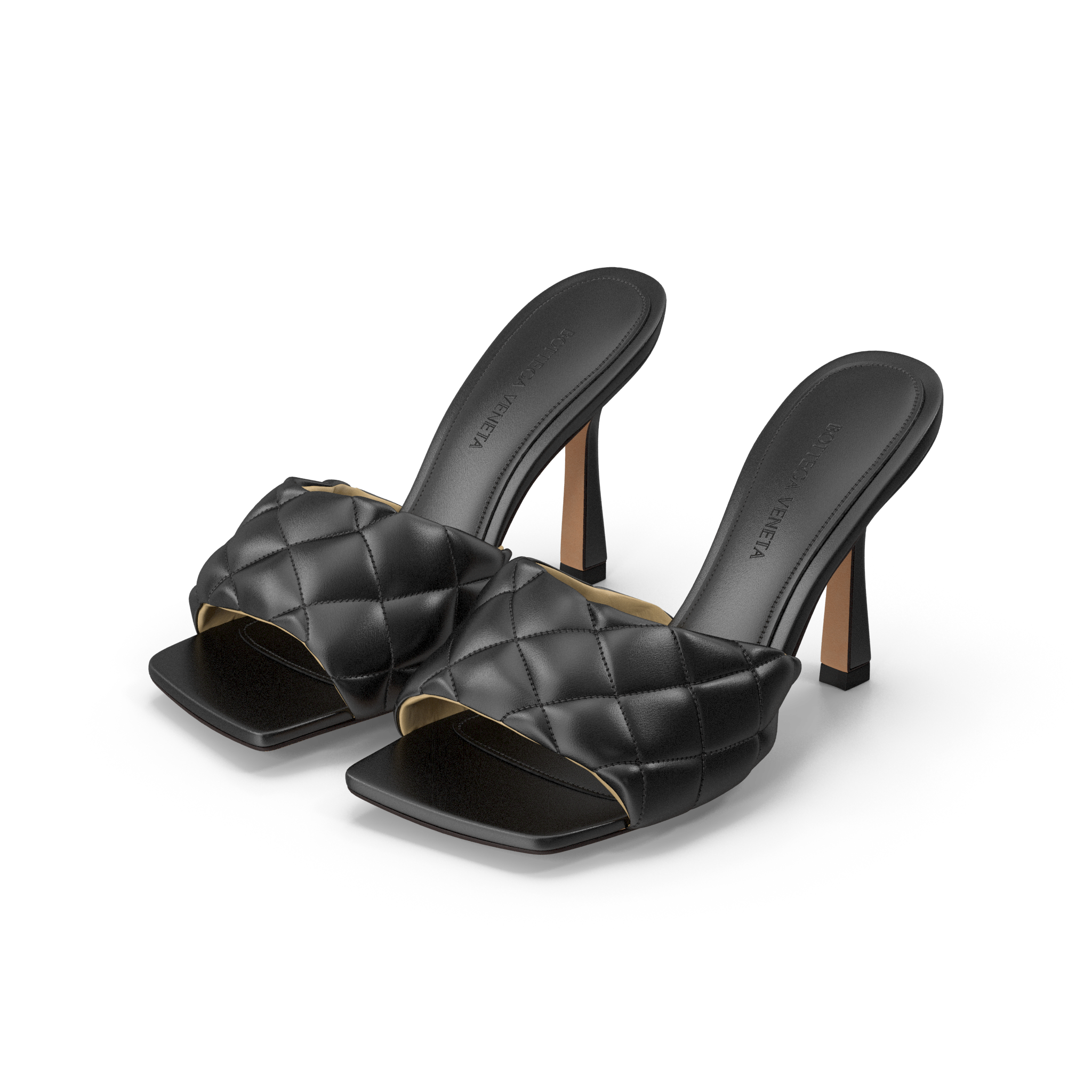
Bottega Veneta Lido Mule. Photo courtesy of Shutterstock / Pixelsquid.
1.
Shoes—along with handbags, of course—are the financial engines of luxury fashion, and Nina Christen has spent a decade designing footwear fuel. Having stayed largely behind the scenes while creating hits for Celine (under Phoebe Philo), Bottega Veneta (the "blown-up" Lido sandal), and Loewe (the egg and lipstick heels), Christen is finally stepping into the spotlight. This month marks two milestones for the designer: the expansion of her namesake label and her official appointment overseeing footwear at Dior alongside Jonathan Anderson. Her namesake collection showcases shoes that are equally fashion-forward and innovative, as they feature an ergonomic, recycled memory foam insole that promise to make high-fashion heels—gasp!—comfortable. Read more here.
2.
Hermès is famously protective of its heritage, making any peek behind the curtain a rare event. This month, we got exactly that via a deep-dive into the house's ongoing collaboration with 86-year-old Dutch graphic design legend Karel Martens. What started as a simple commission for a silk scarf (set to debut at Saut Hermès this March) has evolved into a greater creative exchange. Martens’ signature geometric monoprints have graced the pages of Le Monde d’Hermès, and a limited-edition Garden Party bag—featuring overlapping horseshoe motifs—had a quiet release this past fall. With more items like home goods and additional leather pieces in the pipeline, the partnership proves that even a 189-year-old house can find fresh energy through an octogenarian’s playful, typographic lens. Explore the full interview here.
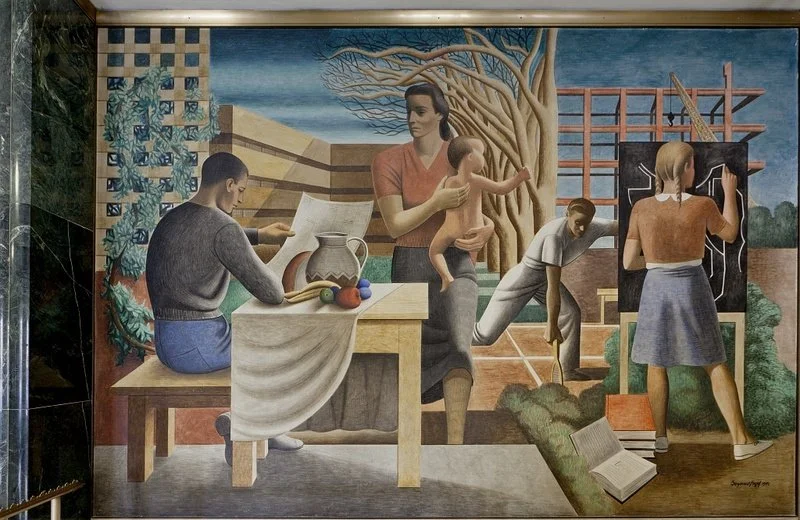
“The Security of the People” mural by Seymour Fogel, Wilbur J. Cohen Building. Images courtesy of the Social Security Administration.
3.
While the current administration’s agenda has included hollowing out cultural funding, the arts found an unexpected shield in Congress this month. In a major bipartisan win, the Republican-led Senate recently defied the administration, voting overwhelmingly to maintain funding for the country’s embattled cultural and arts institutions through 2026. The bill secures $207 million each for the National Endowment for the Arts (NEA) and the National Endowment for the Humanities (NEH).
This win extends to the Smithsonian Institution, the National Gallery of Art, and the Institute of American Indian Arts (IAIA), all of which faced total elimination in the initial budget request. However, the battle isn't entirely over: preservationists are still fighting to save the Wilbur J. Cohen Federal Building—often called the "Sistine Chapel of New Deal Art"—from an "accelerated" sale that could lead to the demolition of its historic murals. For now, the message from Capitol Hill is clear: even in a polarized climate, the institutions that safeguard American identity remain a public good worth protecting. Read more on the funding victory and the fight for the Cohen Building.
4.
One of the reasons I suggest so many Wallpaper stories is their commitment to profiling independent designers. Their latest spotlight on New York-based Colleen Allen is a must-read. A former menswear designer at The Row, Allen’s women’s ready-to-wear line is a study in contrasts, melding delicate Victorian silhouettes and ethereal draping with the rugged utility of menswear construction. It all comes together in an aesthetic that is "glamorous but real." For her Spring/Summer 2026 collection, Allen leaned into the dark intellect of Sylvia Plath and the archetype of the witch, exploring the occult as a form of feminine empowerment. As she looks toward the rest of 2026, Allen is focused on deepening her connection to a "coven" of creative collaborators and perfecting the hidden, intimate details that make a garment feel like magic. Discover Colleen Allen here.
5.
Another independent designer to watch in 2026 is jeweler Inesa Kovalova. Born in Ukraine and now based in the Netherlands, Kovalova’s work scales down architectural shapes to complement the human body. Having trained as an architect before working at high-jewelry houses like Van Cleef & Arpels, she brings a structural logic to her designs that is both futuristic and surprisingly playful. Her latest series features interconnected, Saturn-like orbs that play with the illusion of weightlessness. To achieve these voluminous, large-scale shapes without the typical bulk, Kovalova utilizes a process that requires prototyping multiple times with engineers to ensure that even her most avant-garde pieces feel comfortable and "balanced" on the skin. Learn more about her process here.