What is Wrong at Gucci?
Gucci showed its Resort 2027 collection in New York City three weeks ago, and people are still talking about it. From the Times Square location to the celebrity cast—Tom Brady, Paris Hilton, and Cindy Crawford—and underwhelming fashion, the show has been much dissected.
Because big brands take their Resort lines on the road, there is a massive difference between a destination show that uses an iconic location to amplify a brilliant collection, and one that uses it as a distraction. When a brand tries to engineer a "moment" entirely through its venue, casting decisions, and legacy nostalgia, it usually means the clothes themselves aren't doing the heavy lifting. In a tech-driven world where attention spans are notoriously short, a brand can create a spectacle, but it still must have a clear, cohesive point of view from design to merchandising to marketing, while also remaining relevant for its core audience. The brand must tell a complete story. It’s why even a house as big as Gucci can still struggle to find its footing.
The "Archetype" Trap
The New York City show debuted “GucciCore”—the latest collection by creative director Demna, who is tasked with reviving the brand after Sabato de Sarno’s minimalist “Ancora” era failed to capture the market. Demna’s solution? Taking those clean, classic Wall Street suits and ladies-who-lunch styles and mashing them up with his signature skater kids and streetwear silhouettes. But Gucci’s most successful eras have been when Tom Ford and Alessandro Michele focused its DNA on being unabashedly sexy. It’s a solid market segment, especially now that there is little offered for the woman or man who wants to embrace this super sexy aesthetic.
However, as Gucci continues to push its “archetype” concept, it feels like the brand is trying to be everything to everyone but risks diluting its message. We can see this playing out in the Ready-to-Wear proposition. While it was nice to see Demna pay homage to previous designers in the first couple of collections, the RTW needs to move from slightly clichéd, seen-it-before silhouettes to cutting edge (think: Tom Ford’s iconic white jersey dress with cut out at the hip—sexy, sophisticated and fresh). Gucci’s most successful moments have been when its creative head has recognized the brand’s ability to dictate trends—not by rehashing how people lived 20- or 30-years ago.
The Accessory Deficit
Gucci’s shoe and bag categories are facing the same dilemma, which is a huge problem because these are typically the entry-level products for a brand. As retail analyst Luca Solca pointed out in a recent Business of Fashion podcast, both categories aren’t tracking yet. The brand needs a bag that goes viral and a shoe collection with a few core styles that everyone becomes obsessed with.
For example, I still remember Gucci’s 4” block heel loafer pump from the 90s—in fact, I have the Chanel version of it that’s how big the shoe was at the time—but there is nothing in the current lineup driving that kind of desire. Likewise, Gucci has yet to produce a handbag that telegraphs both luxury-level quality and craftsmanship, especially as many styles are offered in logo canvas. Accessory design and craft need to feel more elevated and unique to gain traction with the aspirational crowd.
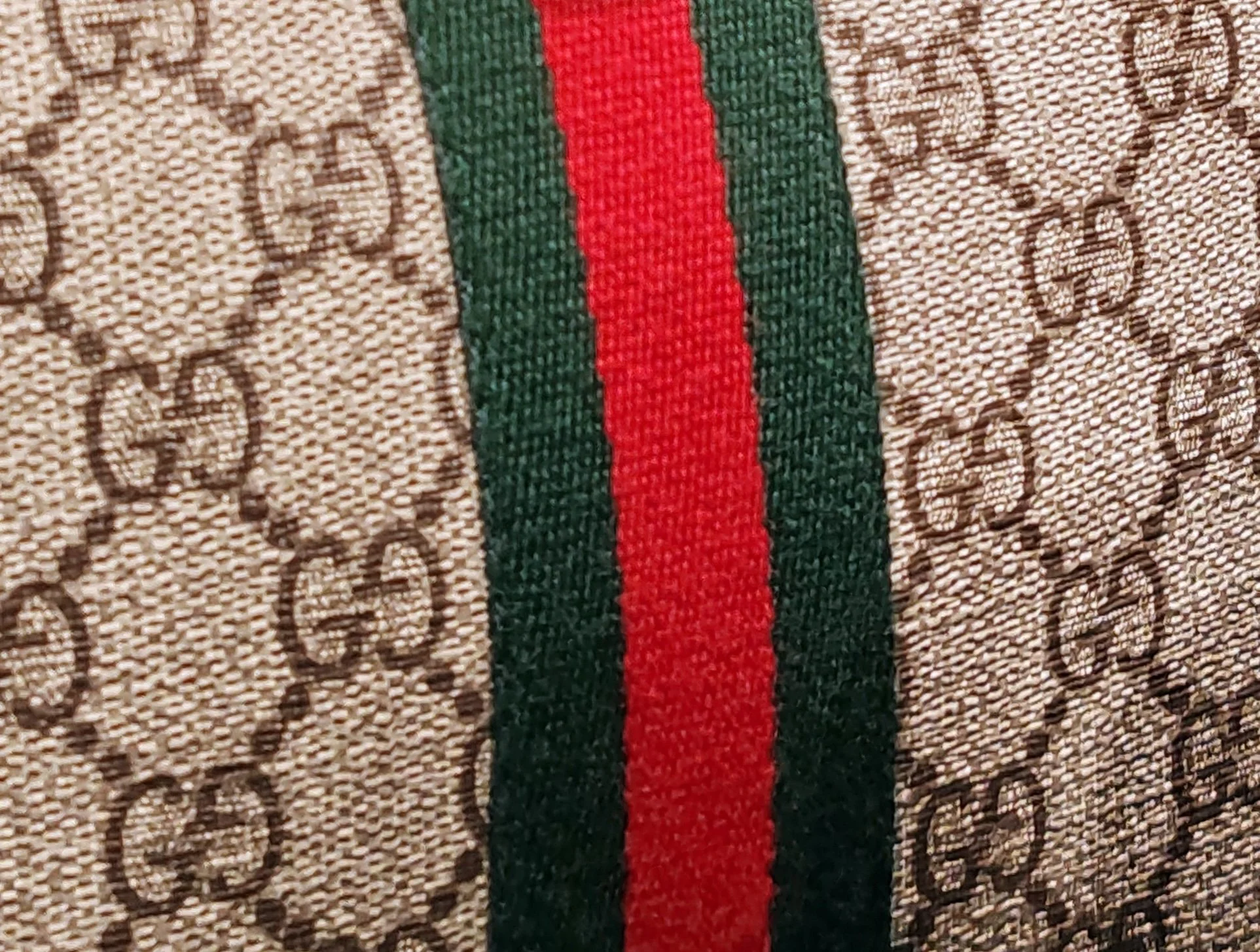
Gucci monogram with red and green web stripe. Photo courtesy of Andrei Antipov / Shutterstock.
The Cultural Disconnect
While it is entirely normal for a brand to cast famous personalities to walk its runway, the actual cast Demna chose to put on the catwalk felt like a disconnect. By relying on legacy Western icons like Tom Brady, Paris Hilton, and Cindy Crawford, the presentation felt less like a directional fashion statement and more like a corporate American talent reel.
Instead of capturing the energy of contemporary youth subcultures, Gucci defaulted to yesteryear's fame to generate mainstream headlines. It looked like a brand stuck in a Western-centric, early-2000s framework of what "celebrity power" means—leaving the house looking out of touch with where the actual commercial energy and global culture reside today.
The Financial Reality of Hype
Take all of this together, and it’s the reason why the Time Square show felt more like a spectacle without substance rather than a brand declaring its point of view. Gucci may be generating viral chatter, but it is not creating cultural relevancy.
Nor is it generating business. One only need to look at the numbers to suggest that the Gucci “reboot” has stalled; per Yahoo Finance, Gucci’s recent Q1 2026 earnings report revealed an 8% sales decline that marks its 11th straight quarterly drop. While the economic environment is challenging, the continued decline proves that the consumer is simply not engaging. In a tightening luxury market where shoppers are pulling back and high-net-worth individuals are prioritizing true value, a brand cannot rely on spectacle alone to reverse a multi-year downward trend.
Everything about Gucci feels like it’s looking backwards—old fashion remixes, dated archetypes, yesteryear’s streetwear hype, and the last generation’s superstars. While some nostalgia is good for a brand to positively reference its history and heritage, too much focus on prior decades starts feeling like a brand is out of step with the time and has nothing new to offer.
The Indie Takeaway: Agility Beats Big Budgets
So, what’s the takeaway for independent brands watching this corporate giant stumble?
While smaller labels often suffer from a lack of capital, their superpower is agility and hyper-focus. For any brand—indie, luxury, or aspirational—trying to be everything to everyone is fatal; having a laser-focused, tightly defined core client is the best way to survive.
Big budgets can buy real estate (Gucci literally shut down Times Square and hijacked every billboard) and they can buy legacy fame, but they cannot buy a clear design point of view. While hype generates noise, structural alignment—where the product, the heritage, the global culture, and the core client all speak the same language—is what generates sales.
Photo of Gucci Billboard in Milan courtesy of Photo-Lime / Shutterstock.